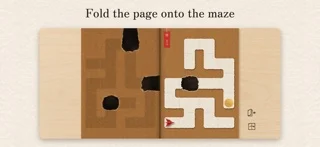
The interesting object is the page
Orisuji is easiest to understand as a paper puzzle rather than a conventional platform game. Its developer describes two pages that can be brought together. A path that is unavailable with the pages apart can become useful once the fold changes how they overlap.
That gives you a good first question for any board: which parts belong to the moving page, and which parts remain underneath? Before making a move, inspect the shape of the routes and imagine the page closing. This is general puzzle-reading advice, not a tested walkthrough of individual levels.
Watch the developer’s explanation in motion
The official trailer demonstrates the central folding idea. Video is particularly helpful here because a single store screenshot cannot explain the transition between two physical phone states. Pause around a change in the board and compare the before and after layouts.
This is a trailer published by Orisuji. It should be read as the developer’s presentation of the game, rather than independent evidence of frame rate, battery use or flawless behavior on every device.
Orisuji: a maze you solve by folding your phone (Trailer) · Watch on YouTube ↗
What to look at before a move
Take stock of the visible routes, the character’s position and anything the developer shows as an obstacle or objective. Then ask what the fold would connect, hide or carry. Thinking about the transformation before moving is more useful than closing and opening at random.
If a level feels unclear, return to the relationship between the two pages. The distinctive design is that the page itself can change the route. You are not only deciding where a character should go; you are deciding which version of the board should exist.
Before buying or comparing it with other puzzles
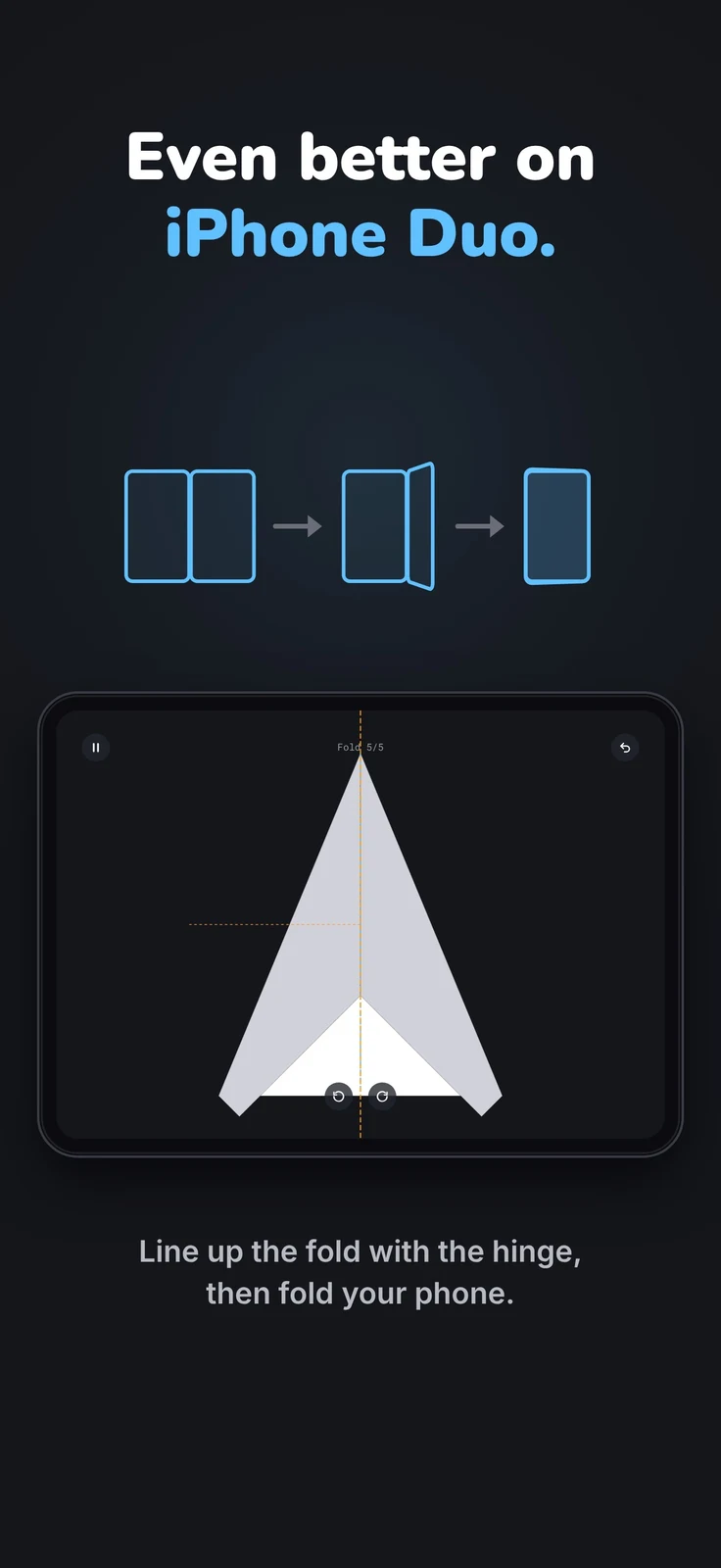
Confirm the current price and system requirements in the App Store. The developer describes different controls on conventional iPhones and iPads, so a screenshot from another device does not by itself prove what you will see on Duo.
If the appeal is folding paper into a shape, compare Hingami. If the appeal is observing a route and reasoning about connections, compare Terminus. Those themes may be a better match even though all three can be grouped loosely under “puzzle games.”
Sources & disclosure
This article uses developer descriptions and store artwork. It is not our hands-on review. Embedded trailers and demos are credited to their creators; prices and features can change.